
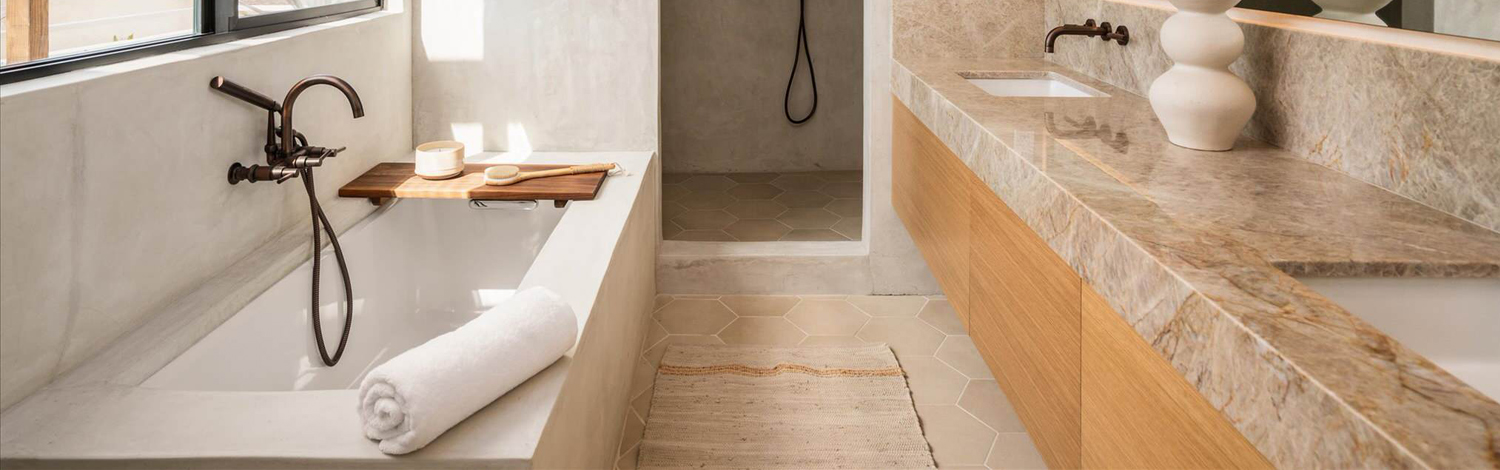
Introduction: When designing a bathroom, one of the most important decisions is selecting the right materials. Not only do the materials need to look beautiful, but they must also be durable and practical for the humid environment of the bathroom. From tiles to vanities, every material choice plays a crucial role in how the space looks and functions. In this blog, we’ll guide you through some of the best materials to consider when designing your bathroom.
1. Tiles: The Foundation of Bathroom Design Tiles are an essential element of any bathroom design. They are durable, easy to clean, and come in a wide range of styles and materials. Some of the best tile materials include:
Porcelain Tiles: Porcelain is one of the most popular bathroom tile materials because it’s highly durable, water-resistant, and available in many styles, from classic to modern. Porcelain can mimic natural stone or wood, offering versatility in design.
Ceramic Tiles: Ceramic is another cost-effective and water-resistant option. It’s easy to install and comes in an array of colors, patterns, and finishes, making it ideal for both floors and walls.
Natural Stone Tiles (Marble, Granite, Travertine): If you want to add a touch of luxury to your bathroom, natural stone tiles like marble and granite are stunning choices. They bring elegance and sophistication to the space, though they may require more maintenance than porcelain or ceramic.
Glass Tiles: Glass tiles are perfect for creating a sleek, modern aesthetic. They reflect light, making the bathroom feel brighter and larger. Glass tiles work well for shower backsplashes or accent walls.
2. Countertops: Durability Meets Style The bathroom countertop is a key element that should balance beauty with functionality. Here are a few popular materials to consider:
Quartz: Quartz countertops are incredibly durable and come in a wide variety of colors and patterns. Since it’s engineered, it’s non-porous, making it resistant to stains, bacteria, and moisture. Quartz is a great choice for busy bathrooms.
Granite: If you want a natural stone with an upscale look, granite is an excellent option. It’s durable, heat-resistant, and adds a touch of sophistication to your bathroom design. However, it needs to be sealed regularly to prevent water damage.
Marble: Marble is timeless and elegant, offering a luxurious touch to your bathroom. It’s perfect for those who want a classic look. Be aware that marble can be prone to staining, so it requires regular care.
3. Vanities: A Stylish and Practical Addition Your bathroom vanity serves as both a storage solution and a design element. When choosing materials for your vanity, consider the following options:
Wood: Wood vanities are popular for their warmth and natural aesthetic. Opt for hardwoods like oak or maple for durability. They can be stained or painted to match your bathroom style, from rustic to modern.
Laminate: For an affordable and low-maintenance option, laminate vanities are a great choice. They come in various styles and colors, and newer laminate options can mimic the appearance of wood, stone, or even metal.
Metal (Stainless Steel or Brass): If you want to create a modern, industrial look, metal vanities work beautifully. Stainless steel is highly durable and resistant to rust, making it ideal for bathroom environments.
4. Flooring: Choose Wisely for Comfort and Durability Your bathroom floor needs to withstand constant moisture, so choosing the right material is essential. Some top flooring choices include:
Vinyl Flooring: Vinyl is affordable, water-resistant, and comfortable underfoot. It comes in sheets or tiles and is available in a wide range of styles, including options that resemble wood, stone, or tile.
Porcelain or Ceramic Tiles: As mentioned above, these are durable options that can handle moisture and foot traffic. They also offer a variety of colors and patterns.
Natural Stone Flooring (Slate, Travertine): Stone floors create a high-end look but may require sealing to protect against moisture. They provide a cool, smooth surface and can be great for creating a spa-like ambiance.
5. Shower Materials: Water-Resistant and Stylish Your shower enclosure material is essential for both aesthetics and functionality. Some great options include:
Glass Panels: Frameless glass shower doors provide a modern and elegant look while allowing your tile design to shine through. They also make the bathroom feel more spacious.
Acrylic and Fiberglass: These materials are lightweight, affordable, and easy to clean. They come in pre-formed shapes, making installation simple.
Conclusion: When it comes to bathroom design, the materials you choose will impact both the style and functionality of the space. Whether you opt for the luxurious look of marble or the practicality of porcelain tiles, the right materials can help create a bathroom that’s beautiful and long-lasting. Be sure to consider factors such as moisture resistance, durability, and maintenance requirements when making your selections.